



The problem
A small Indian tour agency sells fixed-date group trips: a set itinerary, a price per person and a limited number of seats per departure. Most run on WhatsApp, phone calls and a spreadsheet, so two people can pay for the same last seat, prices are worked out by hand, and nobody can see who changed a booking. Tripsmith is that agency’s own site, built so every seat, rupee and change is accounted for.
What I built
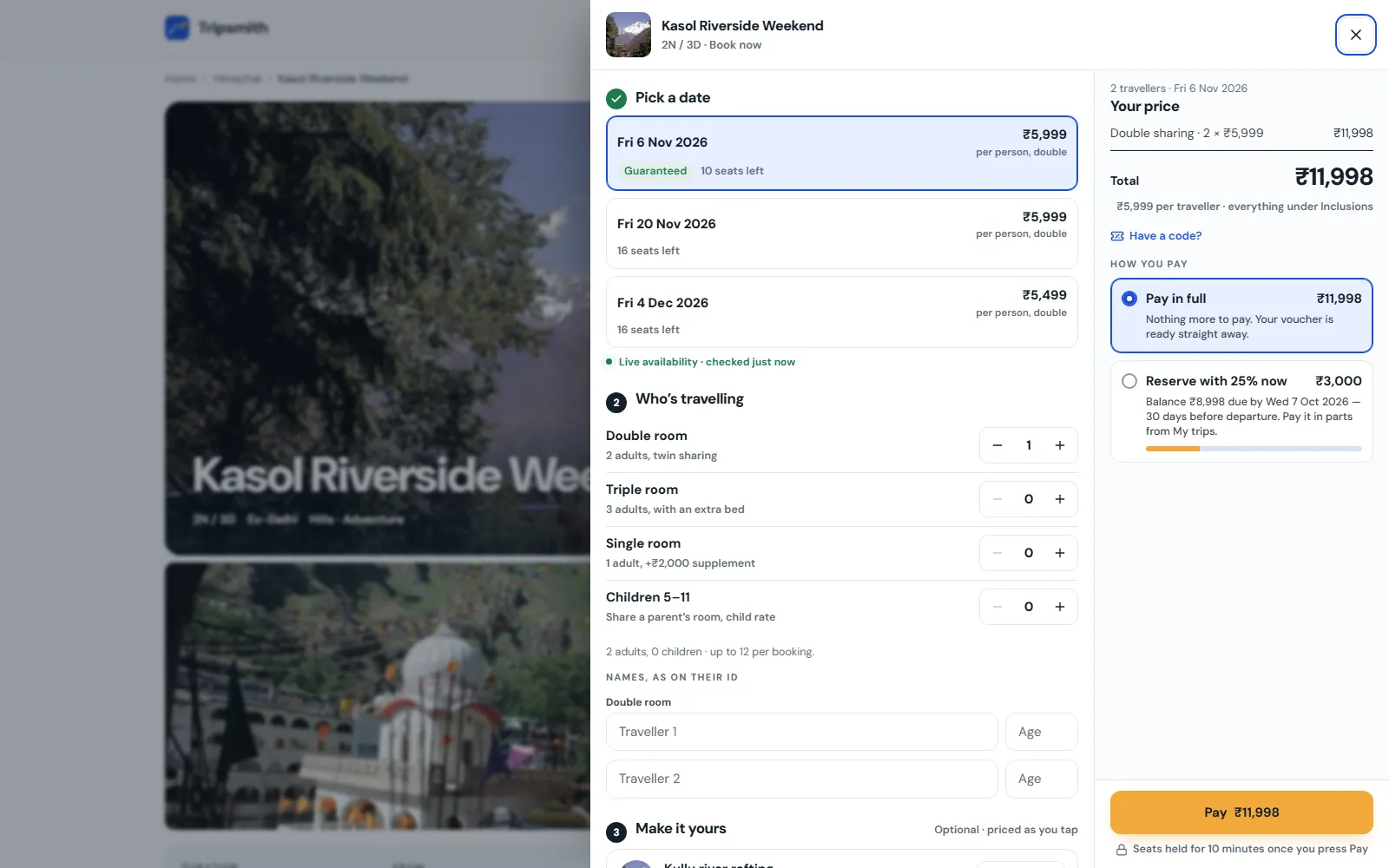
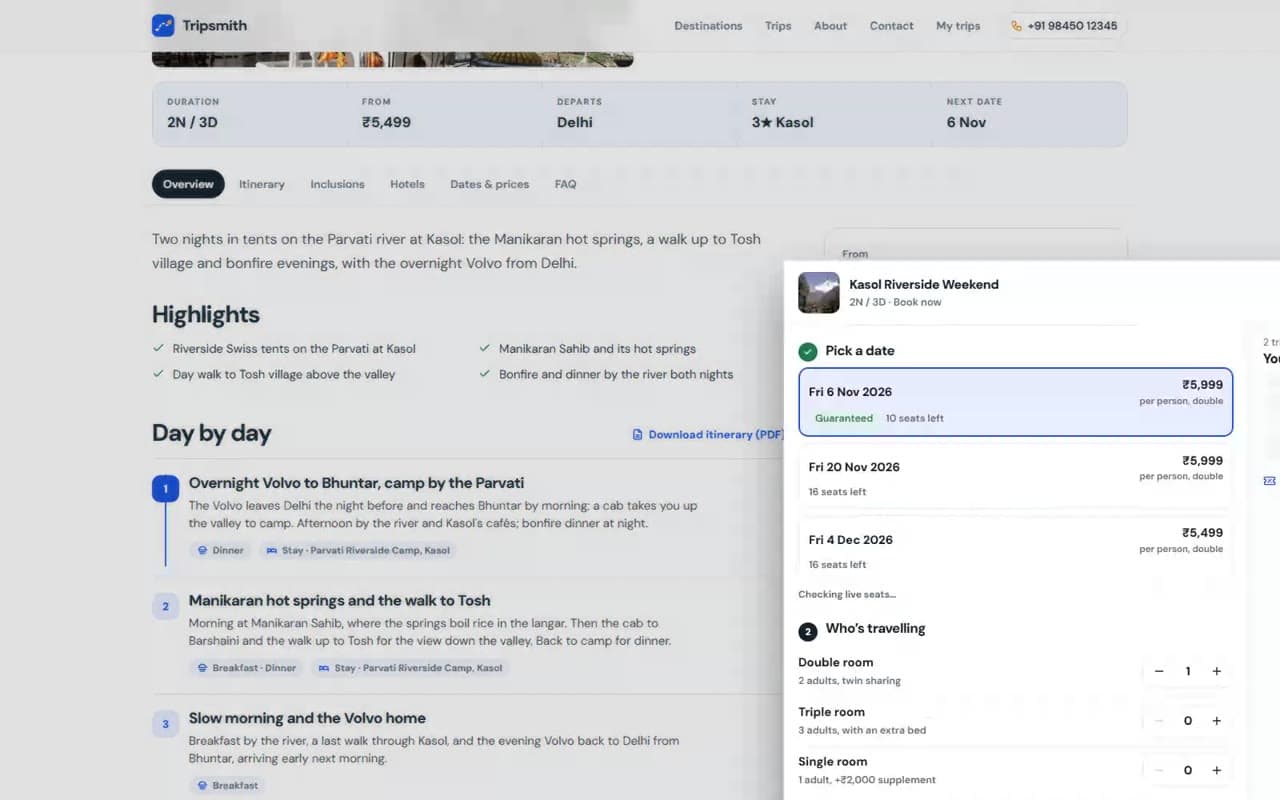
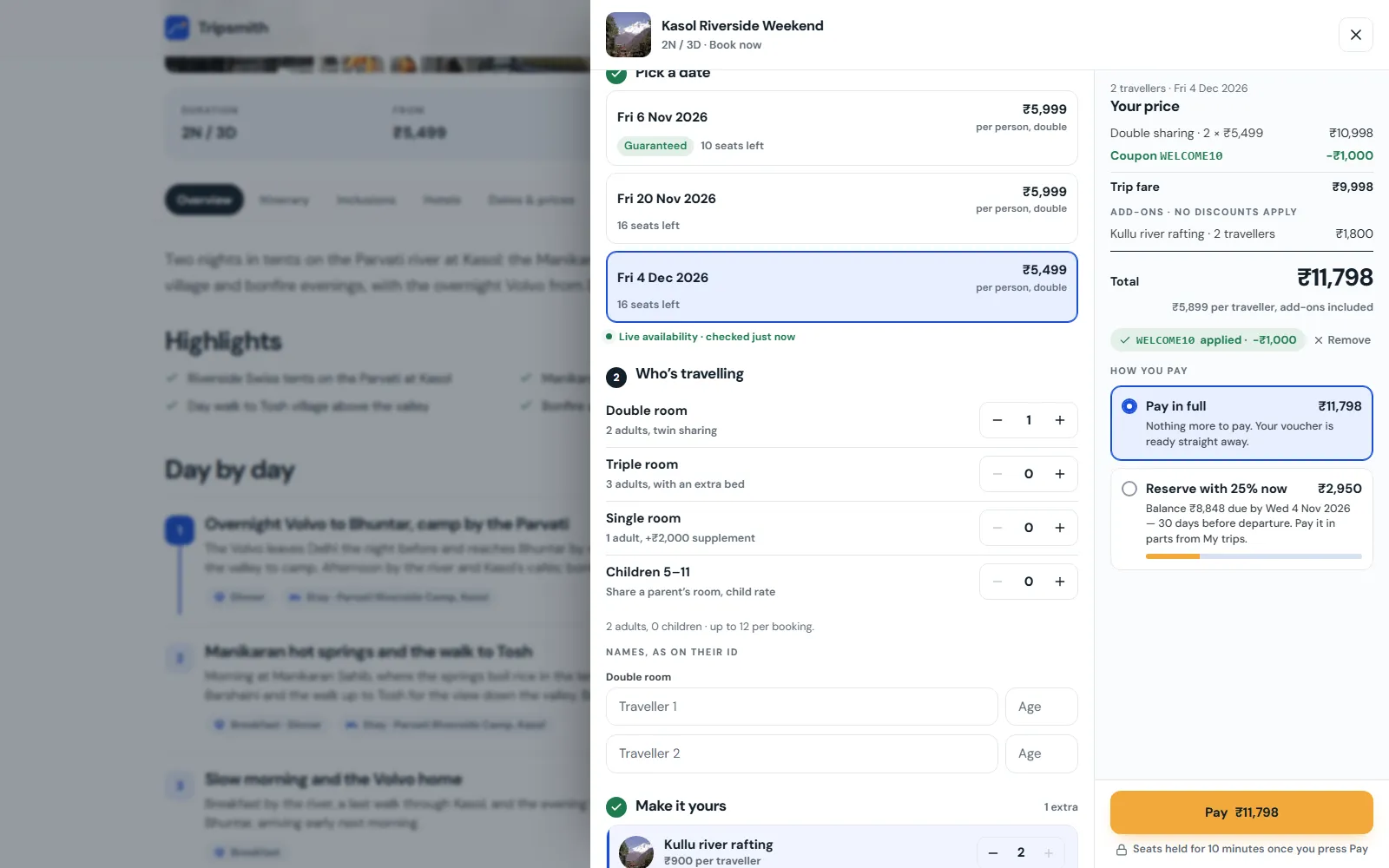
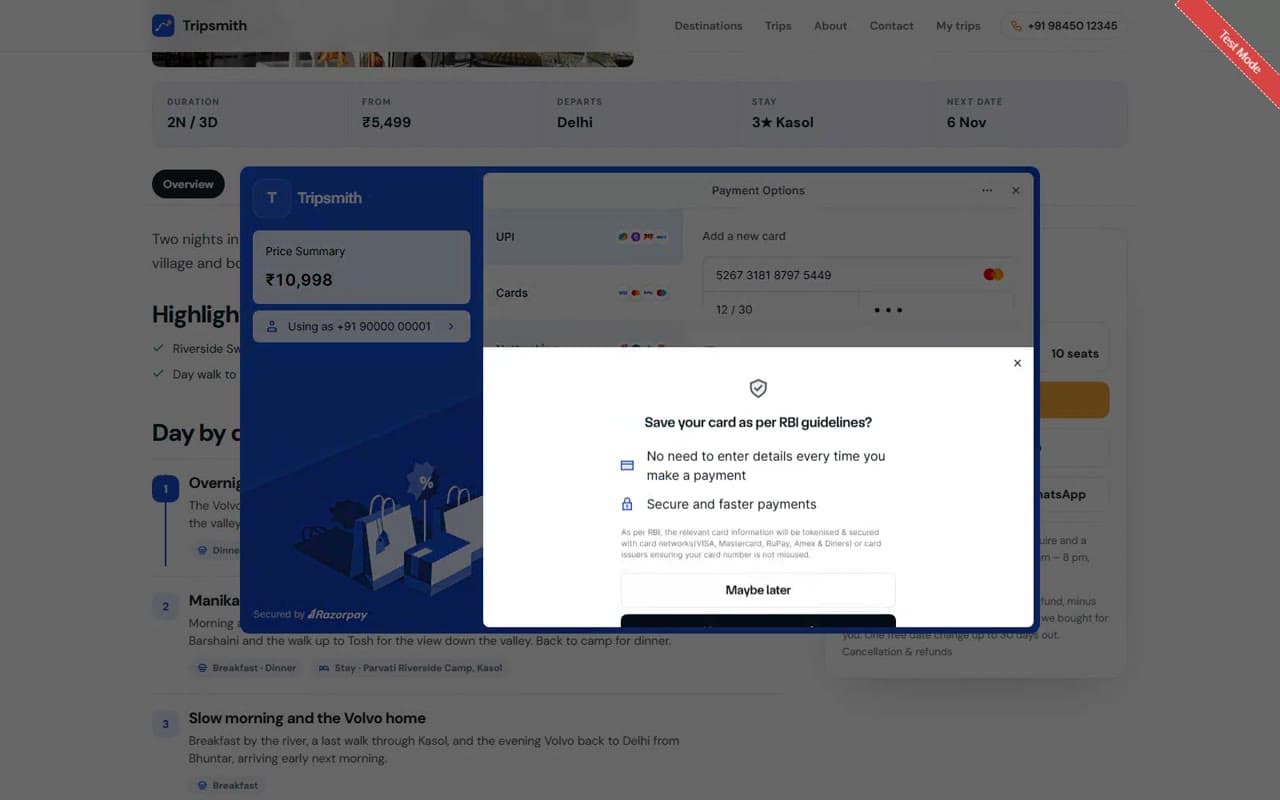
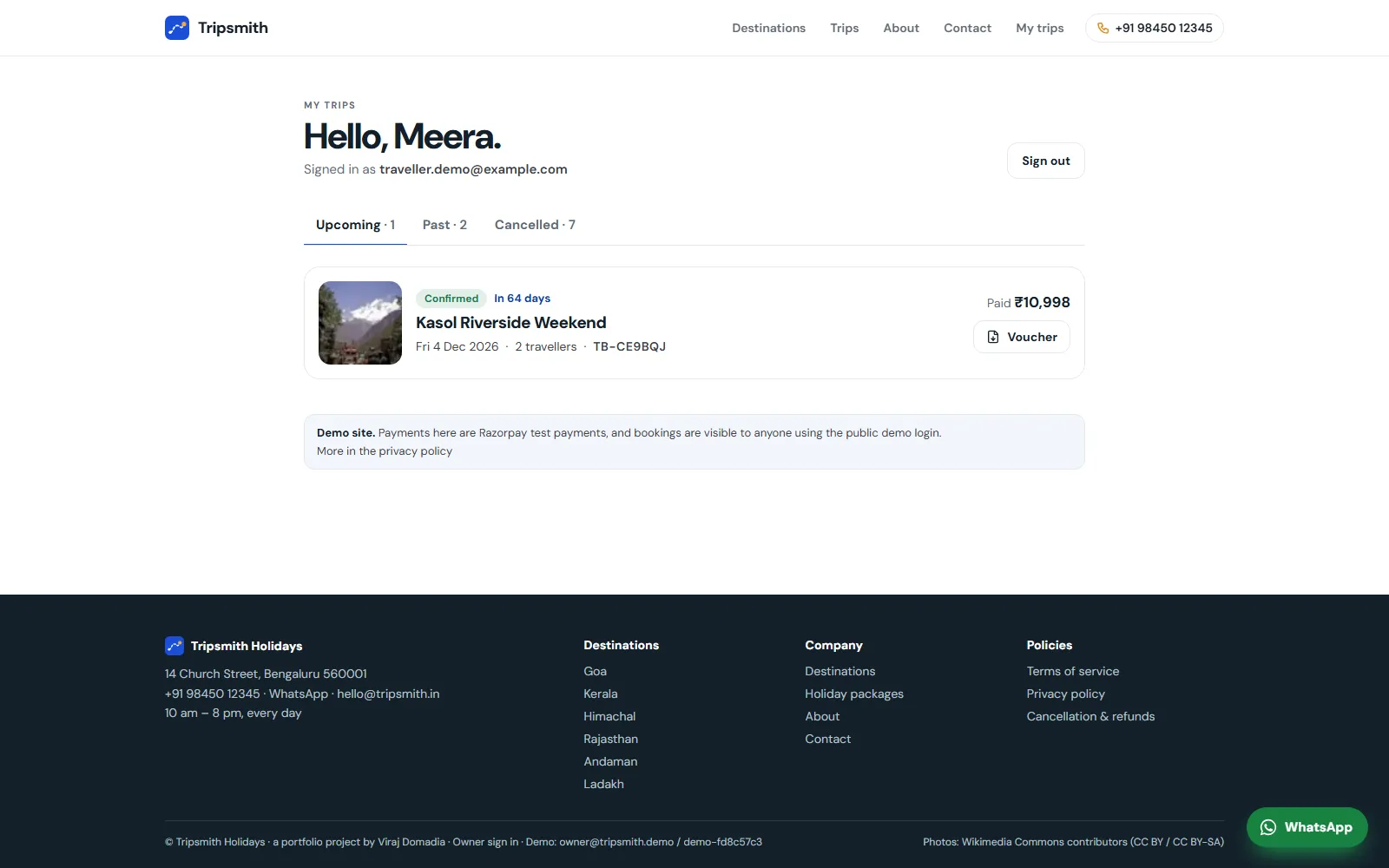
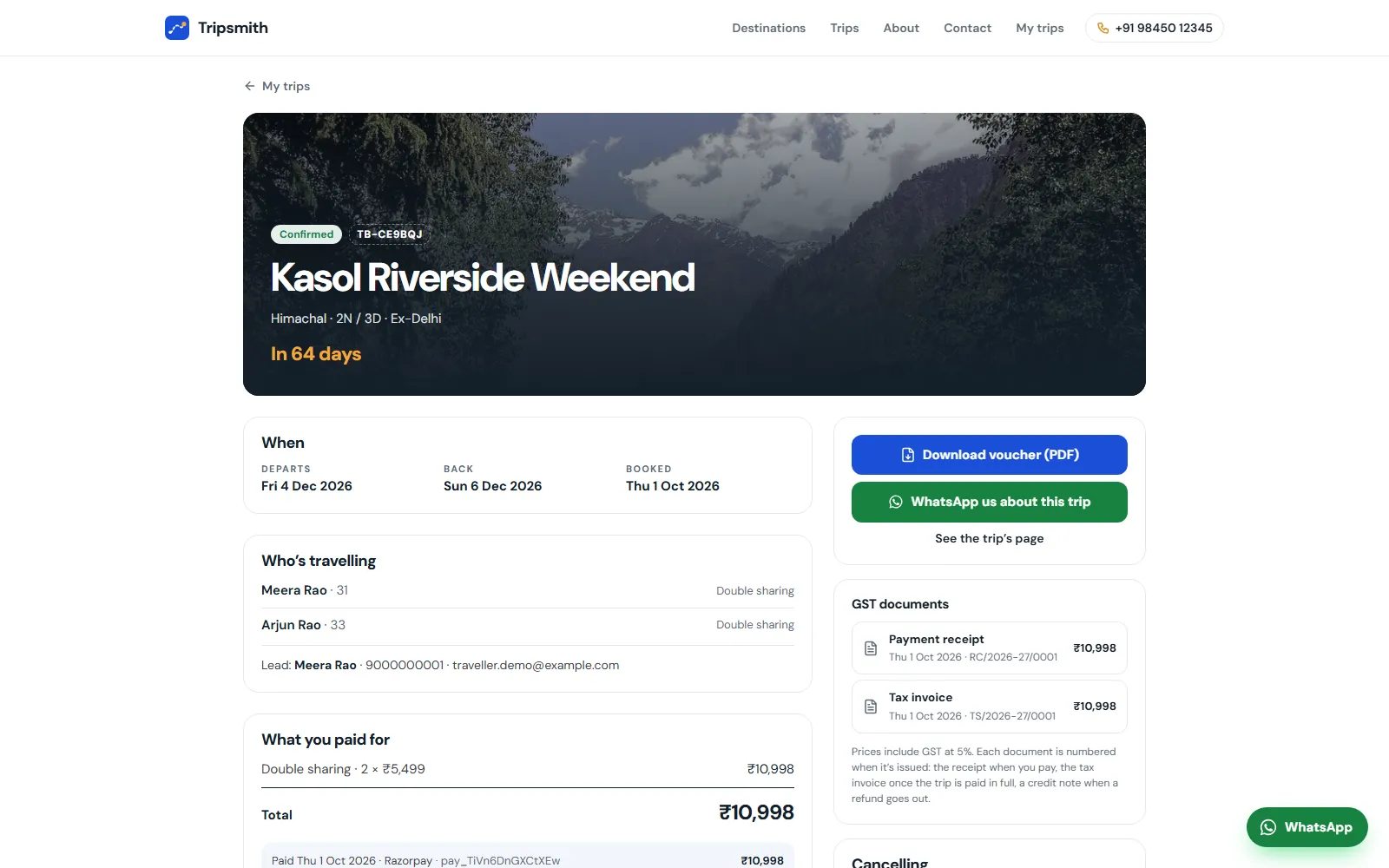
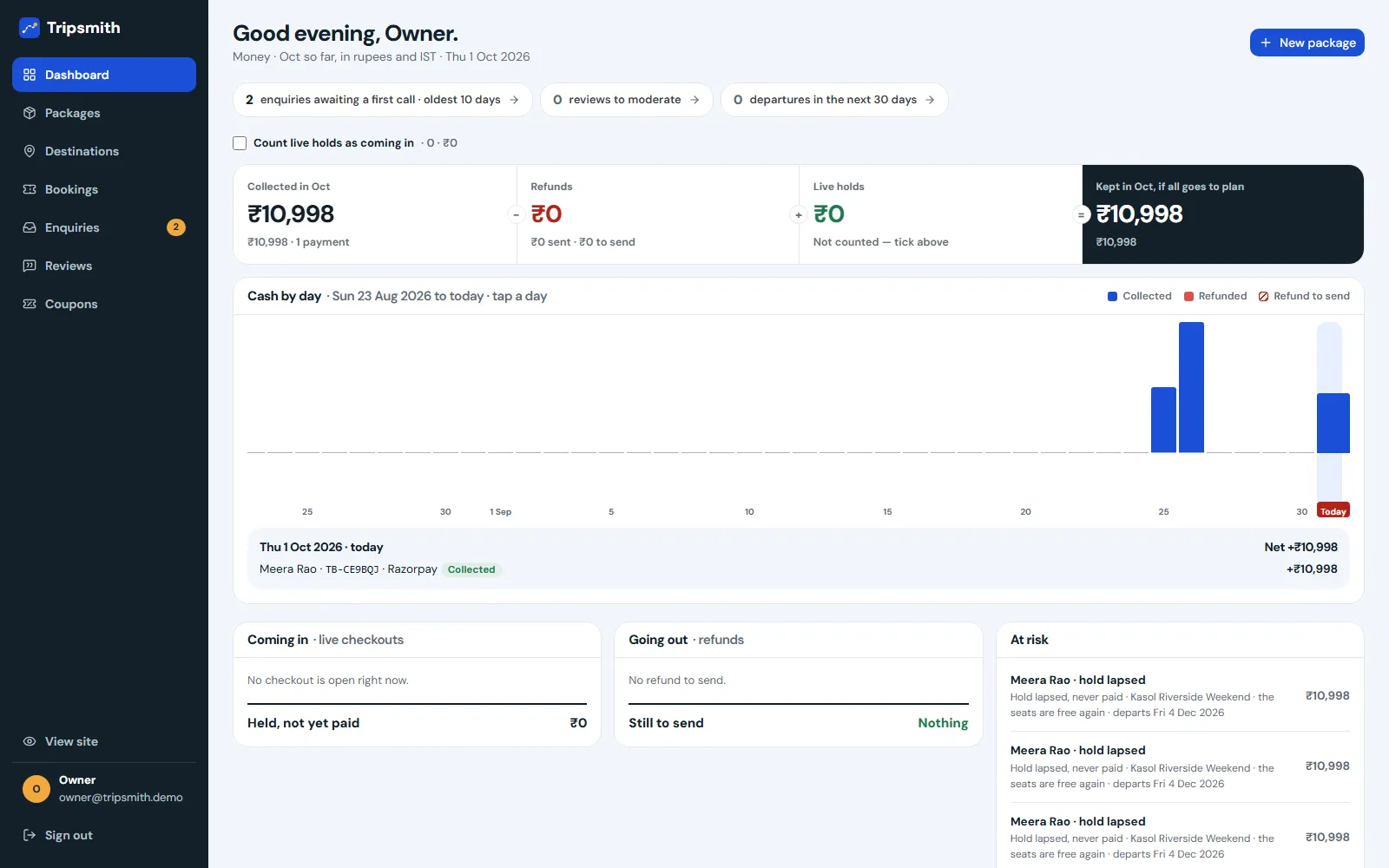
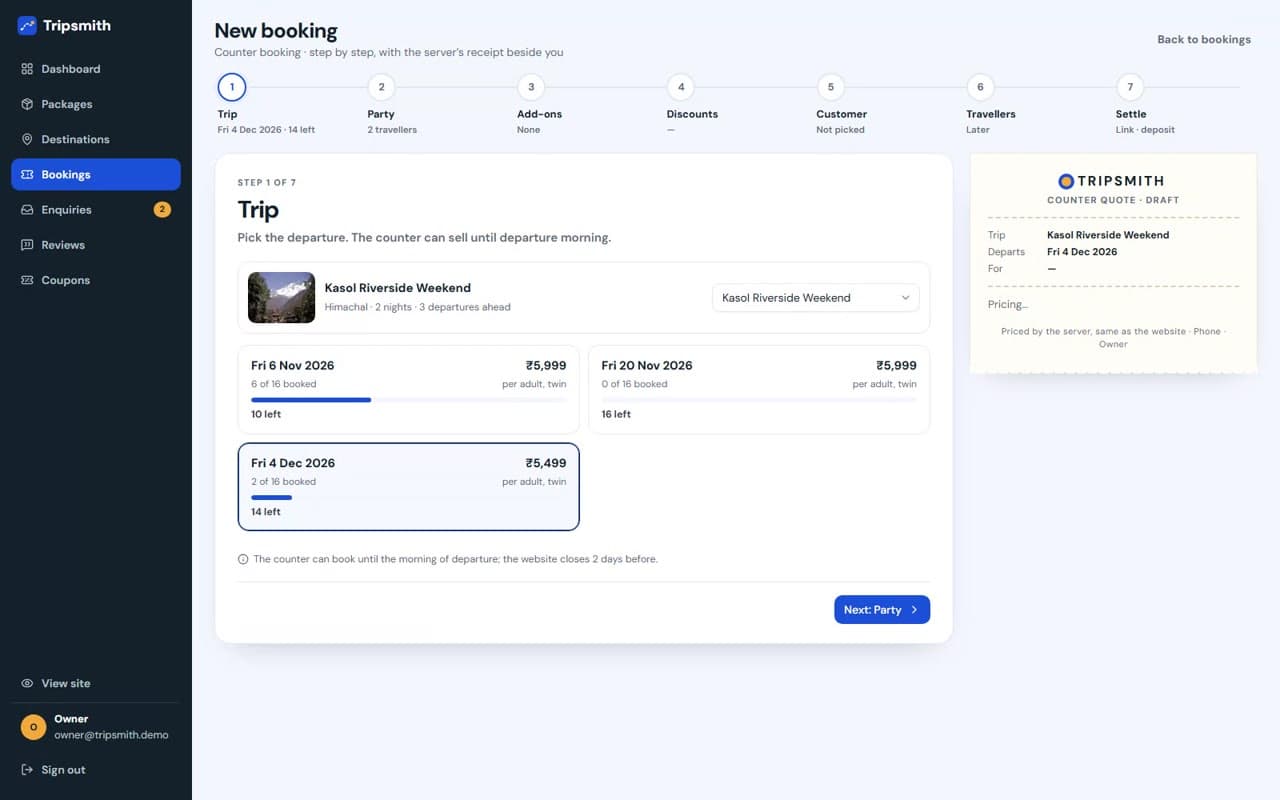
A Next.js site with 14 packages and 51 departures; package and destination pages are generated ahead of time and refresh on demand when the owner edits them. A FastAPI + Postgres API behind it. Customers book with live seats, add-ons, deals, early-bird prices and coupons; pay in full or a 25% deposit through Razorpay in test mode; get a PDF voucher and GST invoice; and sign in with an emailed 6-digit code to manage their trips. The owner runs bookings, refunds, enquiries, packages, coupons, reviews and counter bookings over Razorpay Payment Links from an admin desk on the same API.
Key decisions
The server owns the price
Every quote is built on the server in whole paise: deal, then early-bird, then coupon, with add-ons added last. The browser never sends a price; the owner’s counter screen sends the total it expects and gets 409 price_changed if it moved.
Seats are held, not hoped for
Pressing Pay creates a 10-minute hold. The server locks the customer’s email or phone, then the departure row (FOR UPDATE). A test fires two orders for the last seat at once: exactly one wins, the other gets 409 sold_out.
All payments go through one capture function
The Checkout callback, the sync when Checkout closes, the webhook and payment links all lead into it. Signatures are checked with HMAC and a unique Razorpay payment id turns replays into no-ops. A payment that lands after the seats are gone is cancelled and refunded automatically through the Razorpay refund API.
History can’t be rewritten
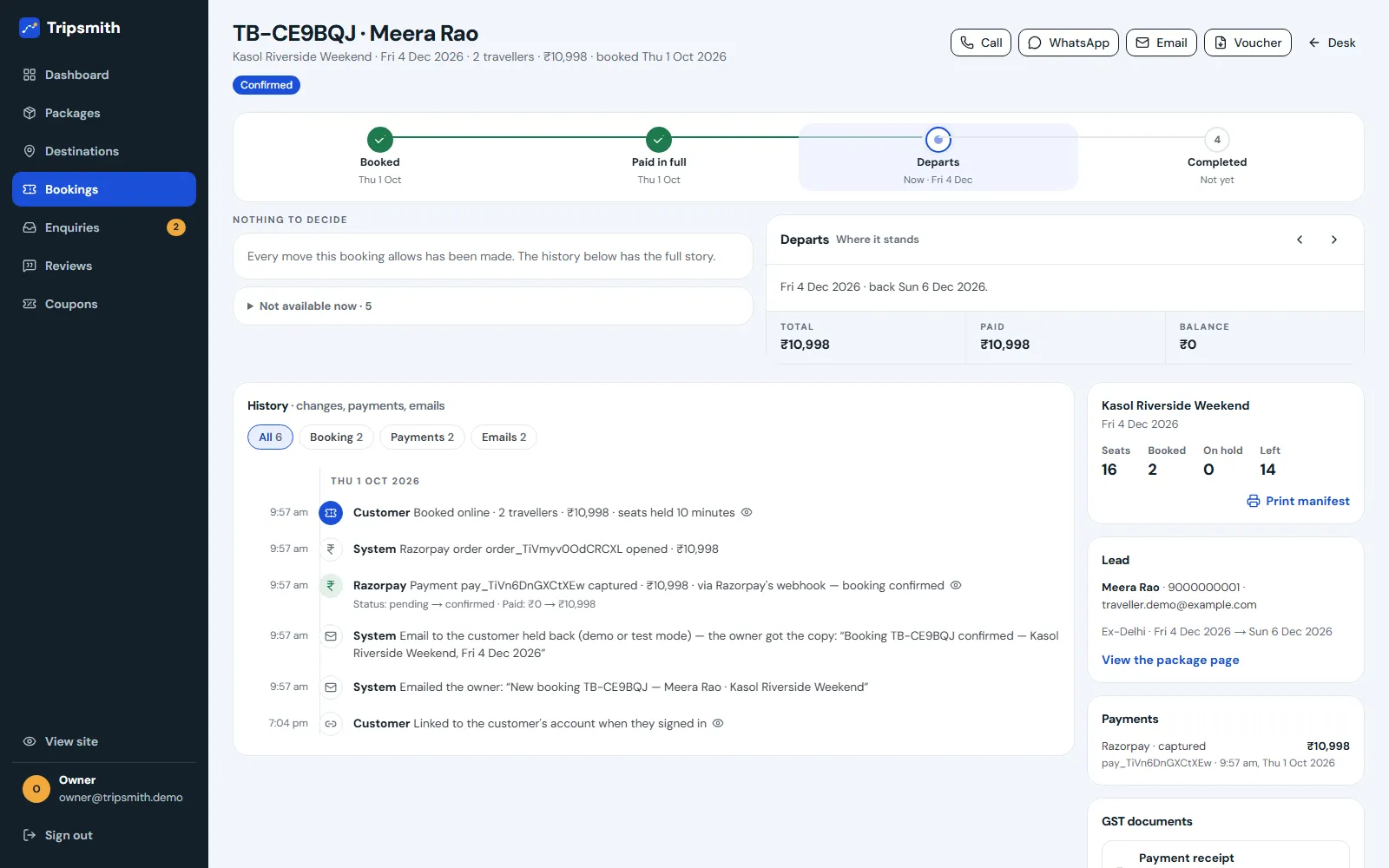
Every booking change is written to booking_events, and a Postgres trigger refuses any UPDATE or DELETE on it. The owner sees it as a timeline, the customer as “Activity”.
GST numbers have no gaps
Receipts, tax invoices and credit notes are numbered per financial year (TS/2026-27/0001) from a counter row taken in the same transaction as the document; PDFs are made with fpdf2. The GSTIN is a demo one, labelled not registered.
Versions
- v1 Agency website Shipped
Catalog, search, package pages, enquiries + WhatsApp, itinerary PDF, owner admin.
- v2 Booking engine Shipped
Razorpay checkout, webhooks, accounts, deals, coupons, reviews, owner bookings desk.
- v2.5 Strengthen Next
Partly live: history log, refunds + GST documents, add-ons, early-bird, deposit + balance, counter booking, admin redesign. Still to come: waitlist, date change, calendar, reports.
- v3 AI concierge Next
Chat that searches the catalog, checks seats and starts a booking.
- v4 Tripsmith anywhere Next
An MCP server with the same tools.
Outcome
Live at tripsmith.virajdomadia.com, taking bookings in Razorpay test mode. Over 750 API tests and over 500 web tests. CI runs three jobs: web, api, and an OpenAPI contract check that fails if the generated types drift. The booking page scores 94 on PageSpeed mobile.
Updated